POM (Acetal/Delrin) CNC Machining Services
Custom POM Components Manufactured to Tight Tolerances for Wear-Resistant, Low-Friction and High-Precision Applications.
STEP / STP / IGS / X_T accepted · NDA available
What Is POM?
Machining of POM
POM (Polyoxymethylene), commonly known as Acetal or Delrin®, is a semi-crystalline engineering plastic widely used for precision mechanical components.
POM combines:
- High stiffness
- Excellent dimensional stability
- Low friction
- Good wear resistance
- Easy machinability
These properties make POM one of the most popular materials for CNC-machined industrial parts.
Key Properties of POM Material
| Property | Typical Value |
| Density | 1.41 g/cm³ |
| Continuous Service Temperature | 100°C |
| Tensile Strength | 60–75 MPa |
| Friction Coefficient | Low |
| Wear Resistance | Excellent |
| Moisture Absorption | Very Low |
| Machinability | Excellent |
| Dimensional Stability | Excellent |
Why Choose POM for Critical Components?
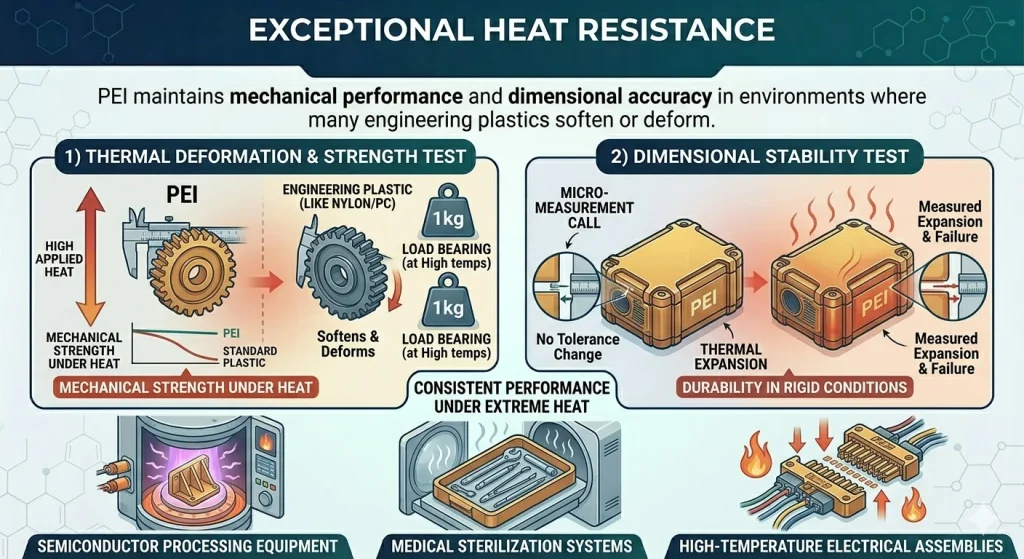
Outstanding Dimensional Stability
POM maintains tight tolerances even under changing environmental conditions.
Ideal for:
- Precision gears
- Bushings
- Mechanical assemblies
- Automation equipment
Low Friction & Wear Resistance
Excellent sliding performance without lubrication.
Applications include:
- Bearings
- Rollers
- Guide rails
- Wear pads
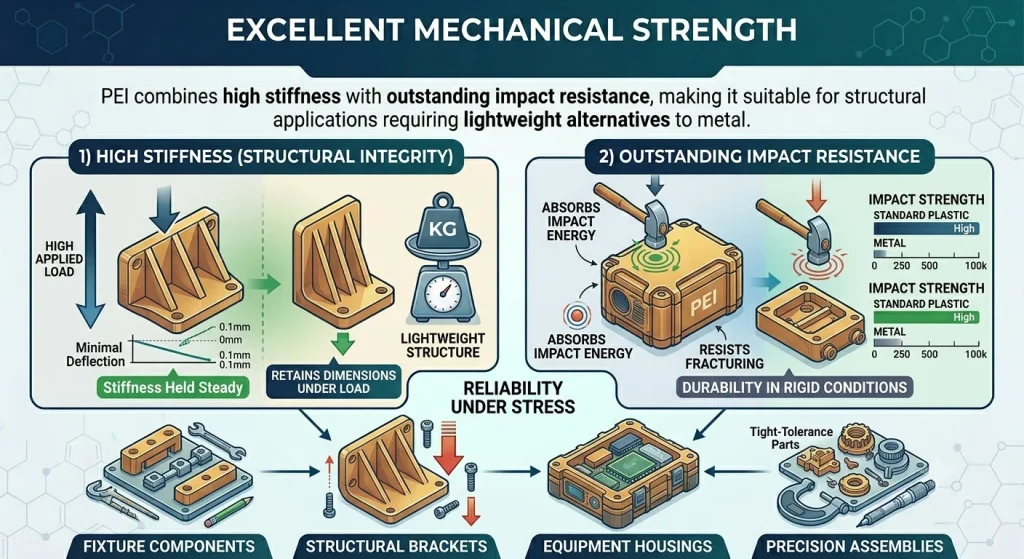

High Mechanical Strength
POM offers excellent stiffness and fatigue resistance.
Suitable for:
- Structural components
- Mechanical systems
- Industrial machinery
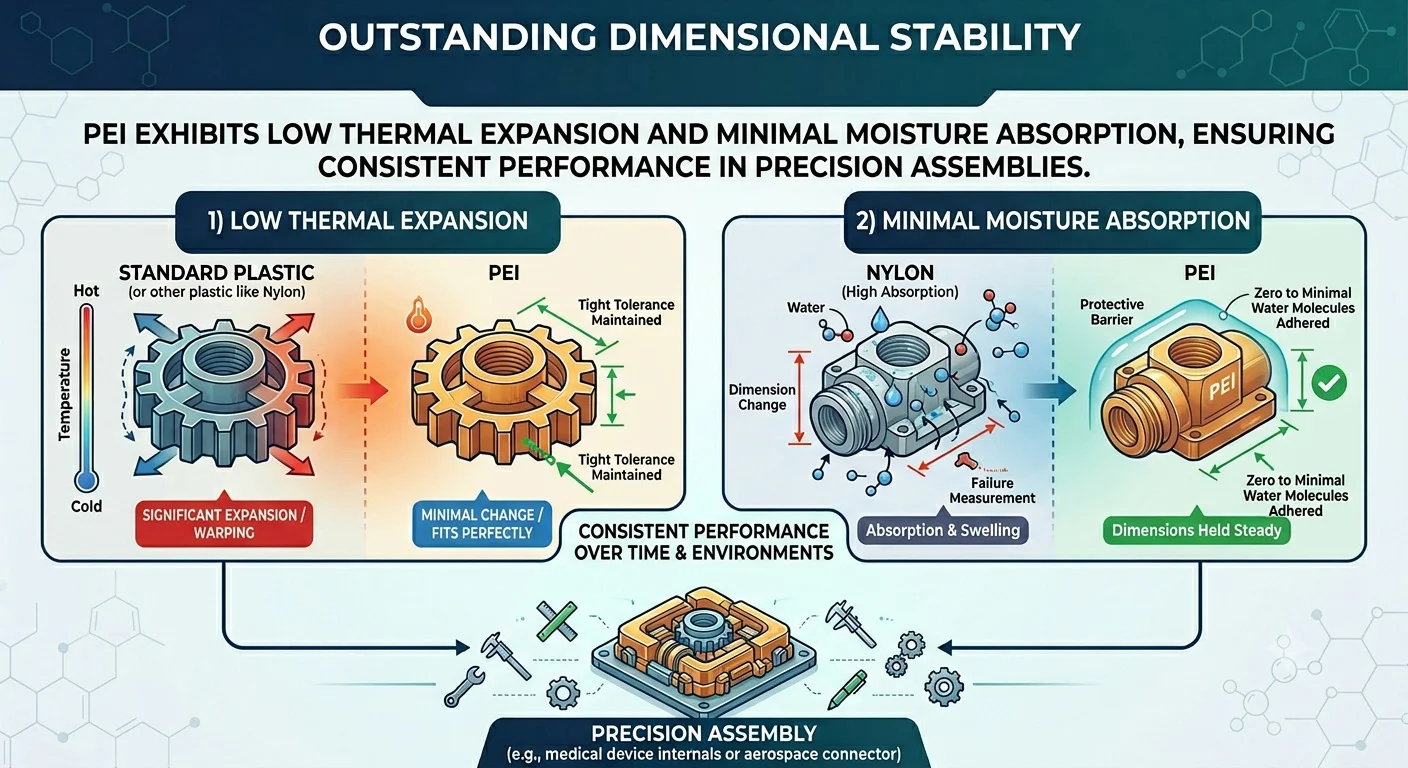
Low Moisture Absorption
POM absorbs significantly less moisture than Nylon.
Benefits:
- Better dimensional accuracy
- More predictable performance
Cost-Effective Engineering Plastic
POM delivers excellent performance at a lower cost than PEEK, PEI, or PAI.
POM Machining Capabilities
Welcome to PlasticPartsCustom, your trusted partner for high-performance POM machining capabilities. Our state-of-the-art CNC machines and experienced team of engineers and technicians enable us to produce high-precision, complex parts with tight tolerances and exceptional surface finishes, using POM , a high-performance engineering thermoplastic.

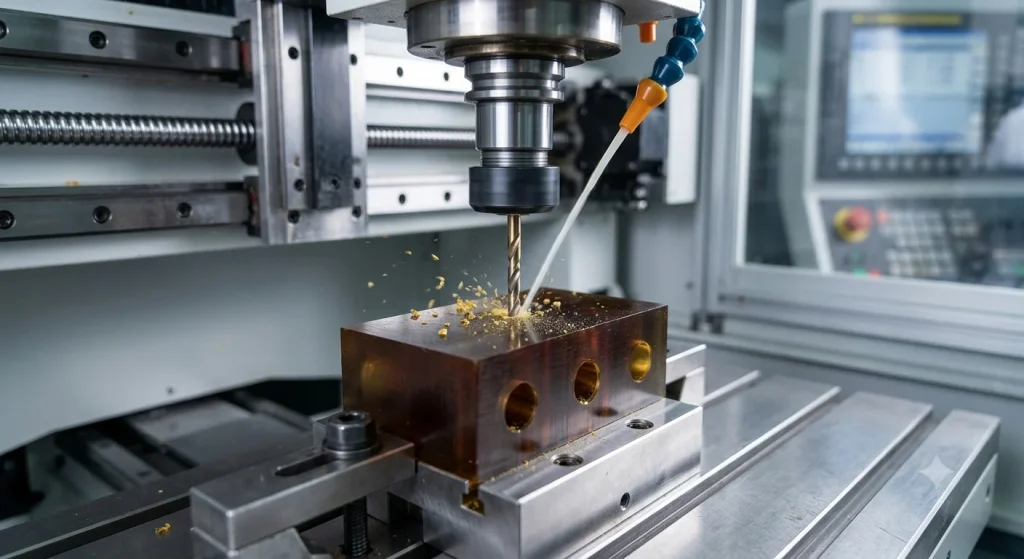
CNC Milling
Our multi-axis machining centers produce complex POM components with tight tolerances and excellent repeatability.
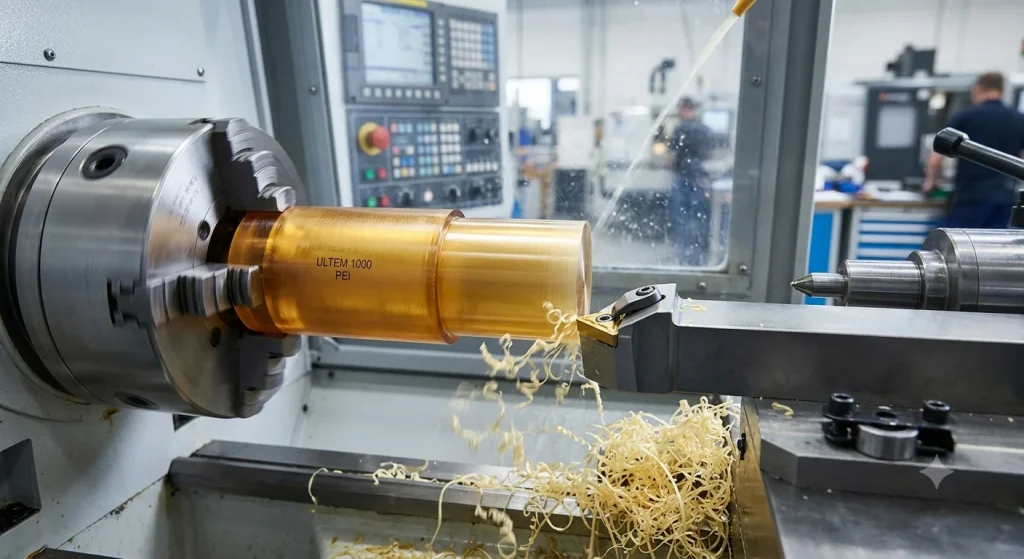
CNC Turning
Manufacturing:
- Bushings
- Rollers
- Sleeves
- Bearing Components
- Seal Rings
Tolerance:
Up to ±0.01 mm
Complex Precision Components
We machine:
- Semiconductor Fixtures
- Vacuum Components
- High-Speed Wear Parts
- Medical Device Assemblies
POM Grades We Machine
POM-C (Copolymer Acetal)
The most commonly used POM grade.
Advantages:
- Better chemical resistance
- Improved dimensional stability
- Lower centerline porosity
Applications:
- Industrial equipment
- Fluid handling systems
- Precision mechanical parts
POM-H (Homopolymer Acetal / Delrin®)
Provides higher stiffness and mechanical strength.
Advantages:
- Higher hardness
- Better fatigue resistance
- Improved wear performance
Applications:
- Gears
- Bearings
- Precision mechanical assemblies
FDA-Compliant POM
Suitable for food contact applications.
Applications:
- Food processing equipment
- Beverage systems
- Packaging machinery
Glass-Filled POM
Enhanced stiffness and dimensional stability.
Applications:
- Structural components
- Precision fixtures
Available Material Forms
- POM Rod
- POM Sheet
- Delrin Rod
- Delrin Sheet
- FDA POM Stock Shapes
Custom Acetal Components We Manufacture
Our POM machining services support a wide range of custom applications.
Precision Gears
High-accuracy gears for automation and mechanical systems.
Bushings & Bearings
Low-friction components for rotating equipment.
Rollers & Guides
Wear-resistant components for conveyors and automation systems.
Valve Components
Precision-machined fluid control parts.
Automation Equipment Components
Fixtures, guides, and mechanical assemblies.
Common Acetal Machining Challenges We Solve
Controlling Thermal Expansion
Proper machining strategies minimize dimensional changes.
Maintaining Tight Tolerances
Precision fixturing and inspection ensure consistency.
Thin-Wall Component Stability
Specialized machining methods reduce deformation.
Surface Finish Optimization
Optimized tooling improves appearance and functionality.
Quality Assurance
Available quality documentation:
Material Certificates
COC
FAI Reports
Inspection Reports
Inspection conducted throughout the manufacturing process, not only at final inspection.
Why Choose PlasticPartsCustom for POM Machining?
| Engineering Plastic Expertise Over 17 years of experience machining high-performance plastics. |
| Tight Tolerances Precision machining up to ±0.01 mm. |
| Advanced Inspection Equipment Mitutoyo CMM Vision Measurement Systems Precision Gauges |
| No MOQ From 1-piece prototypes to low-volume production. |
| Fast Lead Times Typical prototypes delivered within 5–7 working days. |
Industries We Serve
- Industrial Automation
- Robotics
- Packaging Machinery
- Food Processing Equipment
- Semiconductor Equipment
- Automotive Industry
POM vs PTFE: Which Engineering Plastic Should You Choose?
POM (Acetal/Delrin) and PTFE (Teflon) are both popular CNC machining materials, but they serve very different applications. Here is a direct comparison to help you decide.
| Property | POM (Acetal/Delrin) | PTFE (Teflon) |
|---|---|---|
| Max Service Temperature | 100°C (212°F) | 260°C (500°F) |
| Tensile Strength | 60-75 MPa | 25-30 MPa |
| Hardness | Shore D 80-85 | Shore D 50-65 |
| Wear Resistance | Excellent | Good |
| Friction Coefficient | Low (0.20-0.35) | Extremely Low (0.05-0.10) |
| Dimensional Stability | Excellent | Moderate |
| Moisture Absorption | Very Low (0.2%) | Near Zero (0.01%) |
| Machinability | Excellent (easiest to machine) | Moderate (soft, prone to deformation) |
| Chemical Resistance | Good (avoid strong acids) | Excellent (inert to most chemicals) |
| Relative Cost | $ | $$$ |
| Best For | Gears, bearings, mechanical parts, precision components | Seals, gaskets, chemical-resistant liners, electrical insulation |
Choose POM if you need high mechanical strength, dimensional stability, and easy machinability for precision mechanical components like gears and bearings at a lower cost. Choose PTFE if your application requires extreme temperature resistance, chemical inertness, or the lowest possible friction coefficient.
Need help choosing? Send us your drawing for a free material recommendation.
Related Materials
Explore other engineering plastics we machine:
| Material | Key Properties | Best For |
|---|---|---|
| PA6 (Nylon) | High strength, wear resistant, 120°C | Bearings, bushings, structural parts |
| PTFE (Teflon) | Low friction, chemical inert, 260°C | Seals, gaskets, non-stick applications |
| PEEK | High performance, 250°C, high strength | Medical, aerospace, extreme environments |
Frequently Asked Questions
Request a Quote for POM Machined Parts
Whether you need a single prototype or a low-volume production run, our engineering team can help evaluate your design and provide a competitive quotation.
Simply Send Us:
- 2D Drawings (PDF)
- 3D Files (STEP, STP, IGES, X_T)
- Quantity Requirements
- Material Specifications
What You Will Receive
- DFM Feedback
- ✓ Competitive Pricing
- ✓ Lead Time Confirmation
- ✓ Inspection Plan
- ✓ Engineering Support
Applications of CNC Machined POM Parts

POM Plastics Micro-Machining Milling Service
The material is engineering plastic POM (DELRIN) polyoxymethylene, which has higher fatigue strength and rigidity than nylon, high elastic modulus, high hardness, and good self-lubricating performance,…
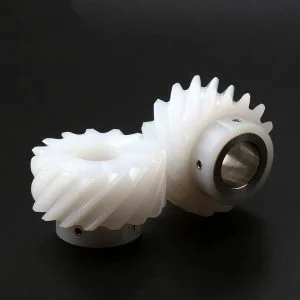
POM-C POM-H Level Components 5-Axis and 4-Axis CNC Machining
The most commonly used colors of POM (DELRIN) are white and black, and other colors can also be customized. The CNC of the POM parts processed by PlasticPartsCustom has a smooth surface with almost no…