CNC Machining Acrylic (PMMA): Highly Translucent After Machining
Acrylic (PMMA) material can produce exquisite parts due to its high permeability, and it also has high toughness and strength. It is widely used in various industries.
CNC Machining Acrylic (PMMA)
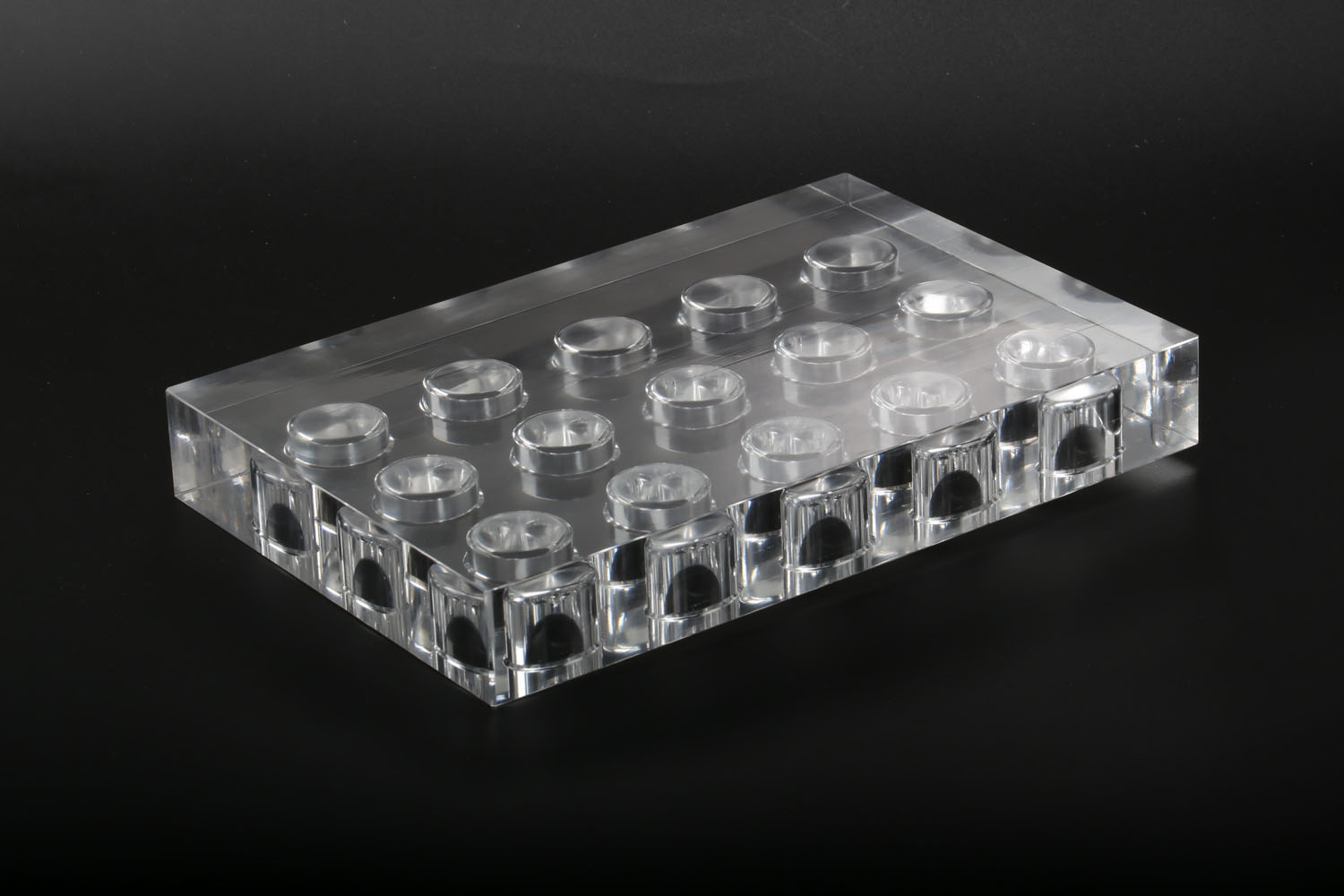
CNC machining acrylic (PMMA) can be used in many industries due to its high permeability, and it also has high toughness and strength compared with glass.
However, after the acrylic (PMMA) material is machined, it will atomize the surface. There is no way to be very smooth. At present, most machining factories can only use the method of polishing to achieve the high permeability of acrylic products. But this operation has very high limitations, such as many inside structures after machining being very hard to polish, especially the structures after five-axis machining, which are generally more complicated. Besides, the additional polishing process increases labor and time costs. Moreover, the polishing effect depends entirely on the skill and professionalism of polishing workers, and the rate of acrylic (PMMA) parts scrap will be relatively high.
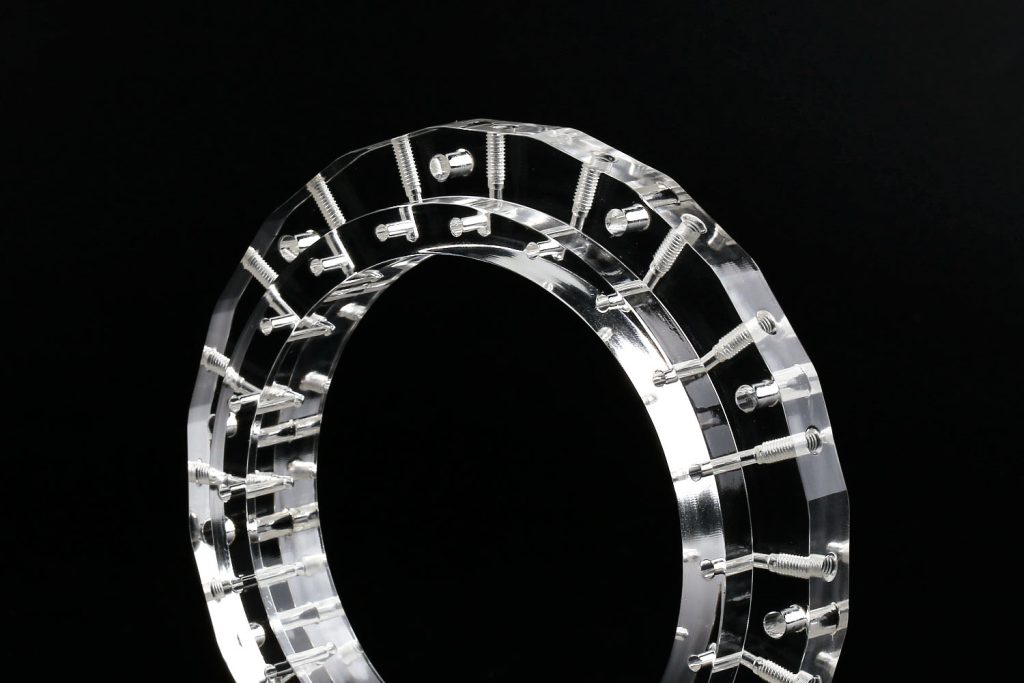
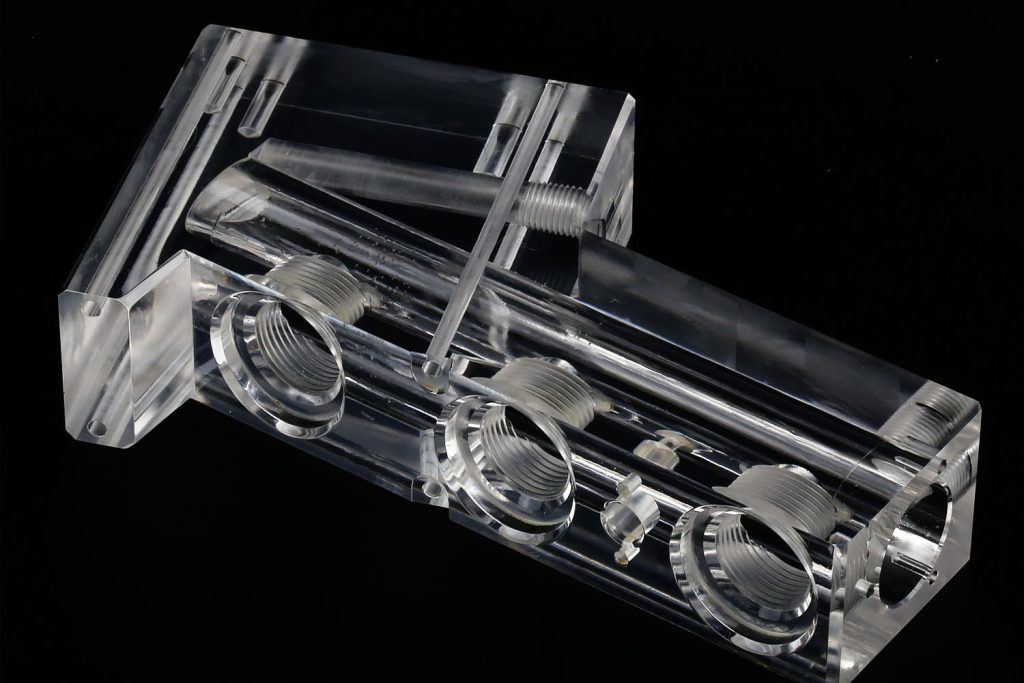
After years of exploration, PlasticPartsCustom has successfully overcome the problem of recognizing after acrylic(PMMA) machining. Now we can successfully produce acrylic parts with high transparency only after CNC machining, which not only ensures the high precision of the product, but also greatly reduces the scrap rate due to polishing and saves the labor and time costs of secondary processing.
Processing process control
- Tool selection: Use tools specifically designed for acrylic processing, such as single edged or double-edged straight-edged tools. These cutting tools can reduce cutting force and avoid tool marks, thereby improving the transparency after machining.
- Cutting speed and feed rate: Adopt appropriate cutting speed and feed rate to avoid generating excessive heat and debris. Excessive heat may cause thermal deformation of the acrylic surface, while debris may affect transparency.
- Cooling lubrication: Use appropriate cooling lubricant during the machining process to reduce cutting temperature and minimize thermal deformation. Meanwhile, the cooling lubricant also helps prevent the accumulation of debris in the cutting area and maintain the cleanliness of the machined surface.
- Process control: Control the temperature and vibration during the processing to ensure that acrylic parts are not affected by external factors. A stable processing environment helps improve the transparency and quality of products.
Excellent processing performance
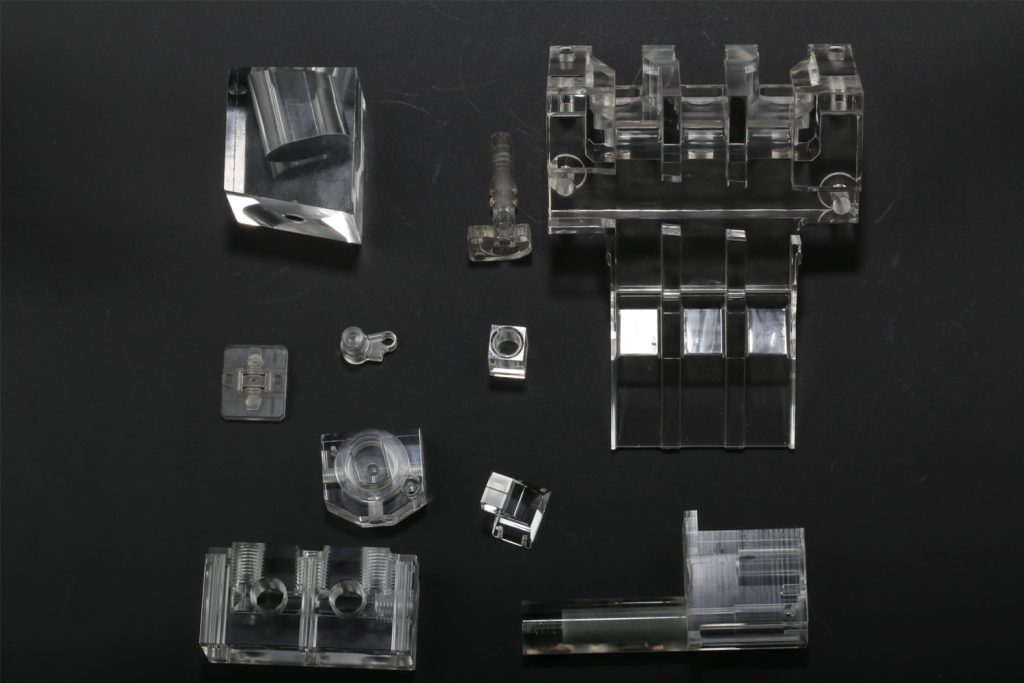
- Easy machinability: Suitable for CNC machining, laser cutting, engraving, etc., it can efficiently complete complex shapes (such as precision gears, irregular structures).
- Low-temperature processing: with a low melting point (about 160 ° C), easy thermoforming (such as bending into an arc shape), and lower energy consumption than glass processing.
- High precision: CNC machining tolerance can reach ± 0.1mm, suitable for precision parts (such as instrument panels).
Typical application scenarios
- Advertising industry: luminous characters, display stands (high transparency + weather resistance).
- Industrial field: Instrument windows, dust covers (chemical resistance + easy processing).
- Medical equipment: test tube rack, surgical tray (easy to clean and biocompatible).
- Architectural decoration: partitions, lighting domes (lightweight and impact resistant).
For production quotes, optical surface requirements, and CNC service details, see our PMMA acrylic CNC machining service.